









India, 24 September 2026: Mainstream consumer technologies are increasingly functioning as assistive technologies for persons with disabilities, finds a new report by the public policy firm The Quantum Hub (TQH).
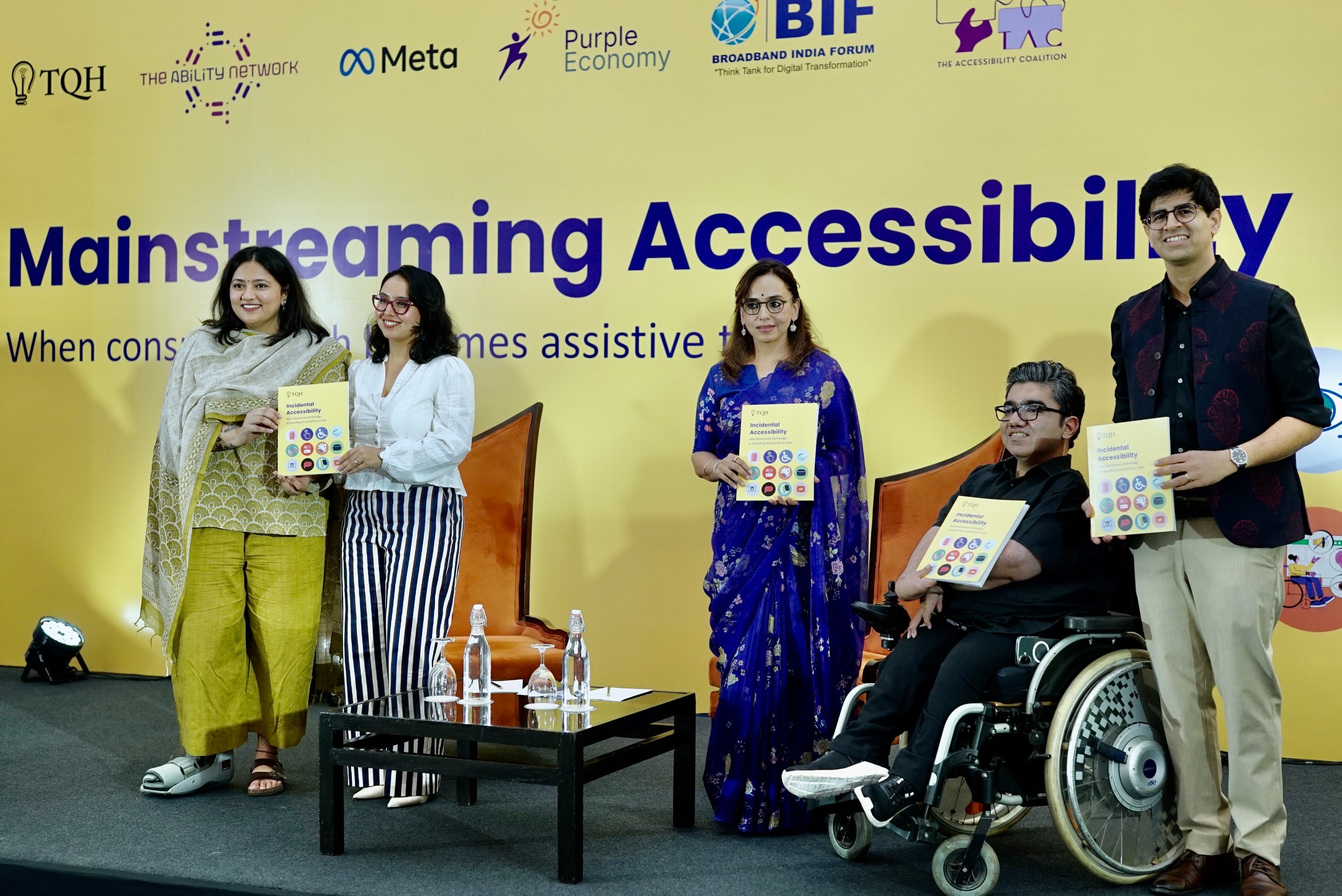
Titled “Incidental Accessibility: How Mainstream Technology Is Expanding Accessibility in India”, the report examines five categories of widely available technology: Smart home devices, dictation software, AI-enabled smart glasses, haptic feedback, and noise-cancelling headphones. It terms the phenomenon “incidental accessibility”: accessibility benefits that emerge from the everyday use of mainstream consumer products, even when some of those products were not designed with such use cases in mind. The report draws on interviews with persons with disabilities, industry stakeholders and published research.
This comes at a time when Indian courts have already begun treating accessibility as a matter of right. In November 2024, the Supreme Court’s ruling in the Rajive Raturi argued for mandatory accessibility standards, giving fresh legal weight to arguments that policy and technology frameworks need to catch up with how people actually use everyday products.
The report was launched in New Delhi at an event held in collaboration with the Broadband India Forum (BIF), The Purple Economy Movement (EnAble India), The Accessibility Coalition (TAC) and The Ability Network (TAN) as Partners. Smt. Manmeet Nanda, Additional Secretary, Department of Empowerment of Persons with Disabilities, participated in a fireside conversation, while Shri Vikash Chourasia, Scientist, Ministry of Electronics and Information Technology,delivered a special address. The event also featured technology showcases by Meta and ElevenLabs.
Speaking at the launch, Smt. Manmeet Nanda said, “For a long time, we’ve thought of accessibility as a separate category of design. This report shows that’s not true. A smartwatch’s vibration, a smart glass camera, a pair of noise-cancelling headphones, these are already doing the work of assistive technology for millions of people, whether or not they were built for that purpose. Our policies and standards must recognise this convergence and ensure that accessibility is built into technology and innovation from the outset.”
Shri Vikash Chourasia added, “Many of these technologies process a lot of personal data. This makes it important that accessibility and inclusion are considered at the design and policy stage itself. As we shape the policy framework for emerging technologies and data protection, these considerations will remain a key priority for the government.”







+ There are no comments
Add yours